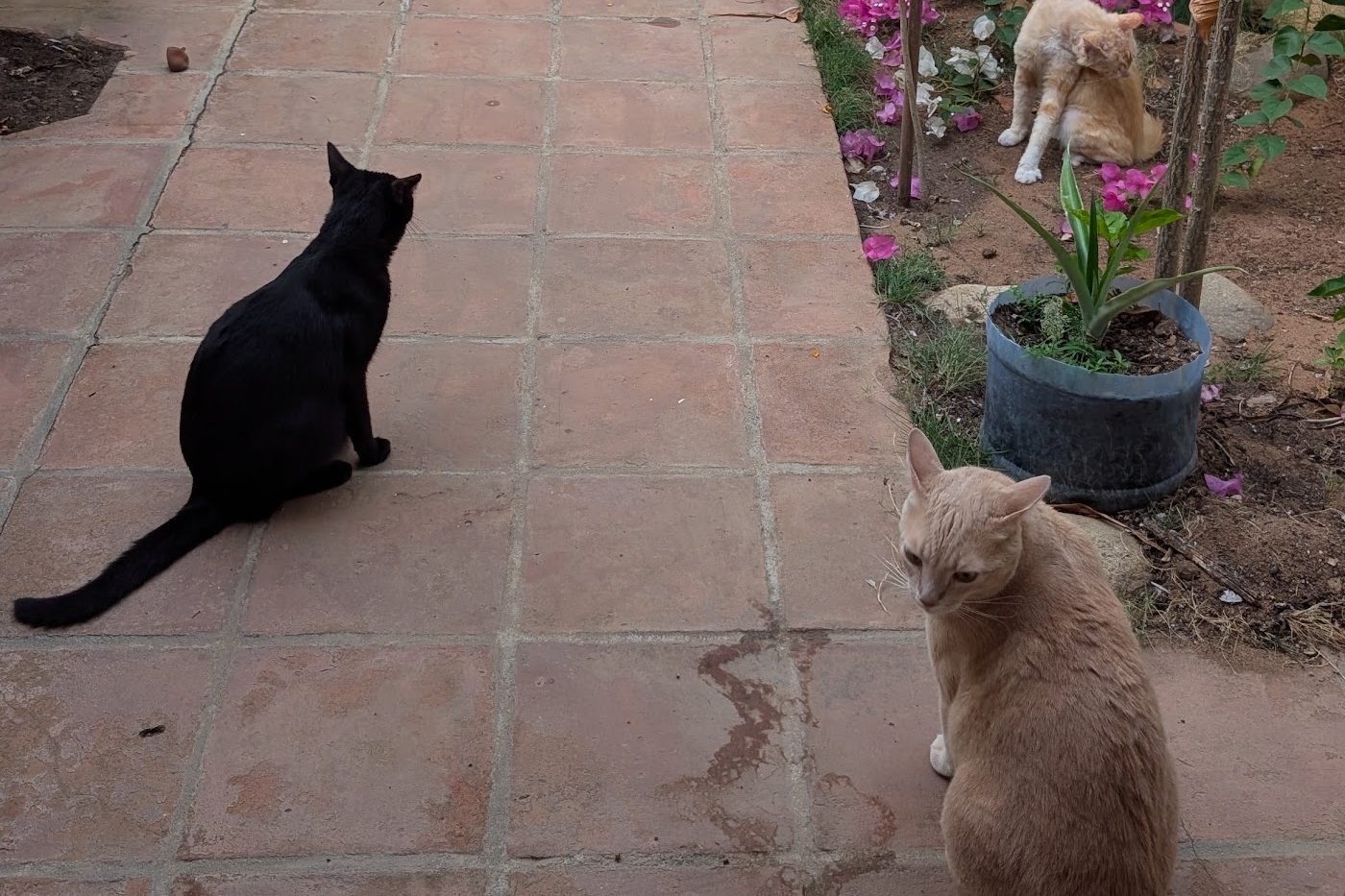
I’m living for a while in Puerto Escondido, on the Pacific coast of Mexico, in a house with a lot of cats. Some are pets. Some are strays. Some are of unknown origin. The owner of the house is in Italy, so while I’m here, I look after them.
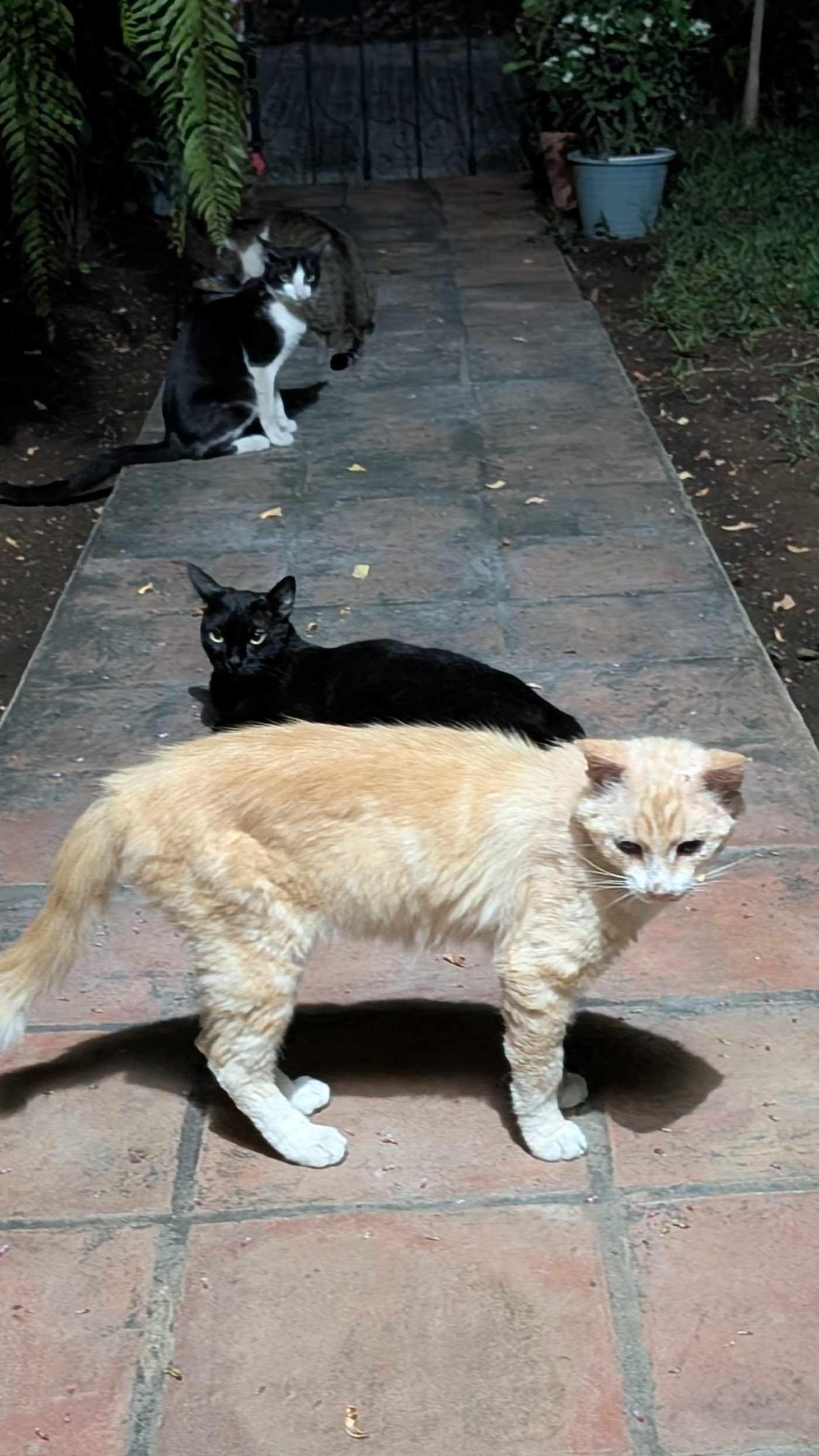
I buy their food out of my own pocket. Sometimes I pay for a vet visit, or deworming medication. Nobody asked me to — it’s just what you do when a cat is sitting at your door looking at you.
I’m sure I’m not the only person in the world doing this. In fact I think there are a lot of us: people quietly becoming informal custodians of cats we don’t technically own. We feed them, we recognise individuals, we notice when one disappears or gets sick, we pay for sterilisation or vet care — usually with no coordination with the other people doing exactly the same thing a few streets away.
The question
Most systems for animals assume every cat needs an owner. But what if the more useful starting point is simply this:
A cat with an identity, a history, and a network of people who care about it.
Identify the cat. Create its record. Let every human encounter after that add to its shared history.
That feels like the seed of something. I don’t yet know what it grows into — this blog is where I’m going to find out, in public, with your help.
(I’m focusing on cats for now. Dogs are welcome eventually — they’re just a different type of cat.)